
Door lock and vane engagement: the 7 mm that gets missed
October 29, 2026
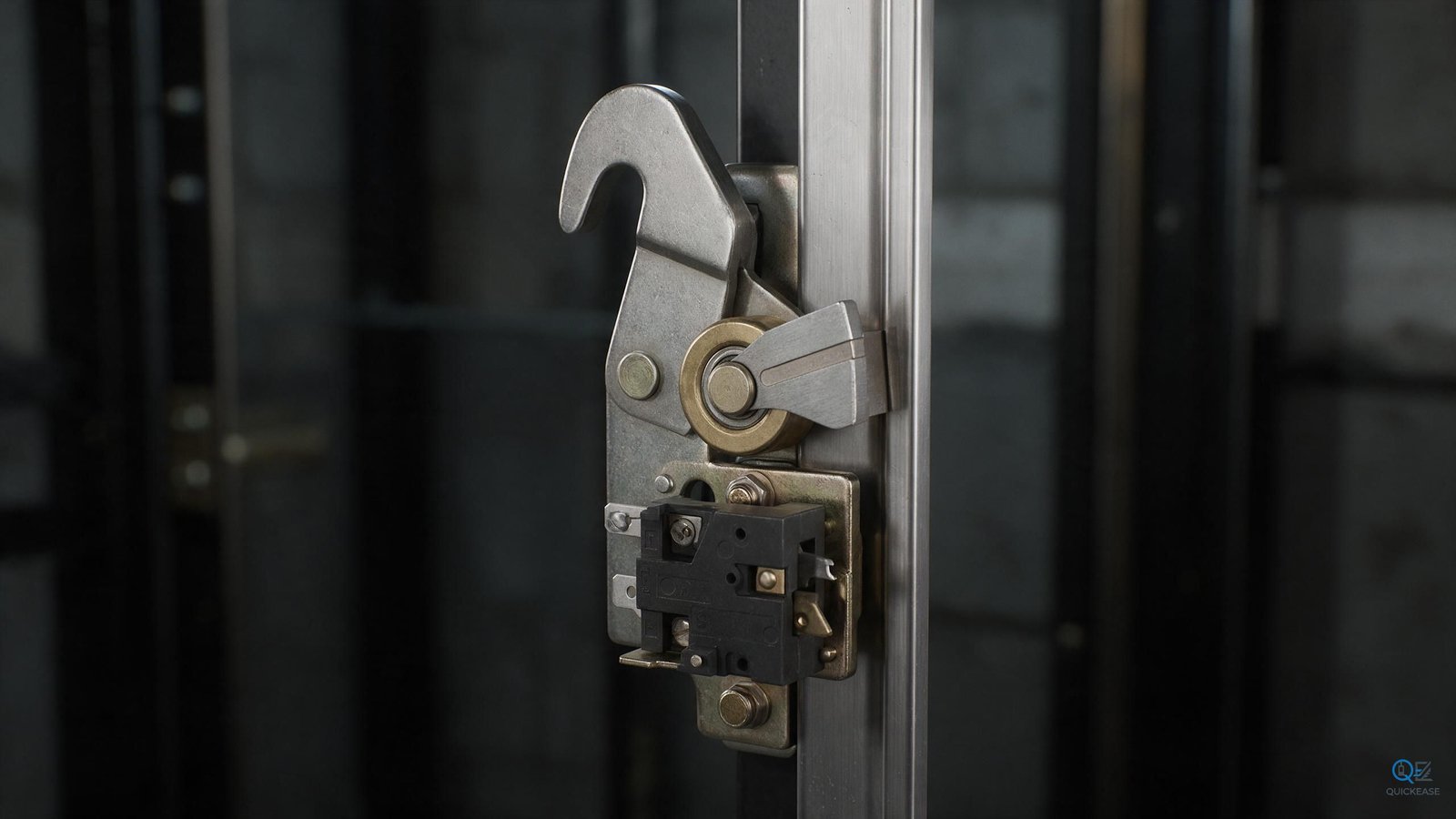
The landing door lock does one job: it keeps the door shut unless the car is at that landing. Everything else about it, the contact, the spring, the roller, exists to make that job reliable. When it fails quietly, nobody notices until someone leans on a landing door with the car three floors away.
The two parts that matter are the lock hook on the landing door and the vane, the blade on the car door that pushes the hook aside. When the car arrives, the vane slides into the lock and lifts the hook off its keeper. When the car leaves, the vane withdraws, the hook drops back, and the electrical contact closes only after the hook is seated.
That order is the whole safety argument. Mechanical lock first, contact second. If the contact closes before the hook is seated, the car can be given a run signal with the landing door physically unlocked, and the controller has no way to know. Every inspection should confirm the order, not just the presence of the lock.
Engagement is measured between the hook and the keeper, or between the vane and the hook, depending on the design. The number to remember is 7 mm: the locking element has to be engaged by at least 7 mm for the lock to be considered closed under the standard most of the world uses. Measure it with a steel rule or a vernier, with the door closed and the car at the landing, and do it at the point where the hook actually bears.
Seven millimeters is smaller than most people expect, which is why it gets missed. A hook that is engaged by 4 mm still looks engaged, still holds the contact closed, and still keeps the door shut when you pull on it gently. What it will not do is hold when a determined person pushes, or when the door settles on a worn sill, or when the building moves and the landing frame shifts a millimeter.
So measure at every landing, not just the one that gets used. Write the numbers down. A landing at 8 mm that was 9 mm last year is telling you something is moving, and the cause is usually a loose lock bracket, a worn roller, or a sill that has dropped.
While the door is at the landing, check the vane clearance. The vane has to enter the lock without rubbing, with roughly equal clearance on both sides, usually somewhere between 5 and 10 mm total depending on the lock. A vane that is hard against one roller wears the roller flat and puts a side load on the hook. That is the source of the rattle you hear at one particular floor, and the rattle is the sound of metal wearing.
The contact deserves its own check. Look at the contact faces: pitted, blackened, or bridged with a bit of wire, and the lock is no longer a safety device. Bridged contacts are more common than anyone admits, usually done to get a car running at night, and they are the first thing an inspector looks for. If you find one, remove it and fix the actual fault, even if it means the car stays out of service.
Test the mechanical lock with the power off. With the car away from the landing, try to open the landing door by hand. It should not open more than a few millimeters. Then open it with the emergency key, as a firefighter would, and check that the unlocking works smoothly and that the door closes and re-locks by itself. A lock that needs a second push to re-lock is a lock that will be found open one morning.
The spring is a wear part. A tired spring lets the hook sit low, which reduces engagement and can hold the contact open intermittently, producing a car that refuses to run at one floor for no apparent reason. Replace springs on age, not on failure.
Adjustment follows the measurement. If engagement is short, the lock bracket usually has slotted holes: loosen, shift the lock toward the vane by the difference, tighten, and measure again. Do not bend the hook, and do not file the keeper to make it look deeper. If engagement is fine but the contact closes early, adjust the contact cam, because correcting one fault with the other is how a lock ends up engaged 9 mm with the contact already made. After any adjustment, run the car away and back three times and re-measure: a bracket that was loose will move again under the door's own weight.
A worn hook is worth looking at closely. The bearing face rounds off over the years, so the hook still engages 7 mm but only touches the keeper on a narrow edge. That lock will hold a pull test and let go under a shove. Compare the profile against a new hook if you have one, or against the mirror-image lock at another landing that gets less use.
When you order a replacement lock, the model number is rarely enough. Photograph the lock from the side with the hook engaged, measure the door thickness, note the hand (left or right), and measure the distance from the lock to the door edge. Landing door locks look alike and differ in the hook profile, the roller diameter, and the contact position, and a lock that bolts up but engages 3 mm short is worse than the worn one you removed.
One last thing, and it is the one that matters most. The lock is the only safety device on an elevator that depends on a person not interfering with it. Keep it clean, keep it adjusted, and keep the contact honest, because everything else on the car can fail and the lock is what keeps the shaft closed.