
What an escalator handrail belt is, and how it is driven
June 30, 2026
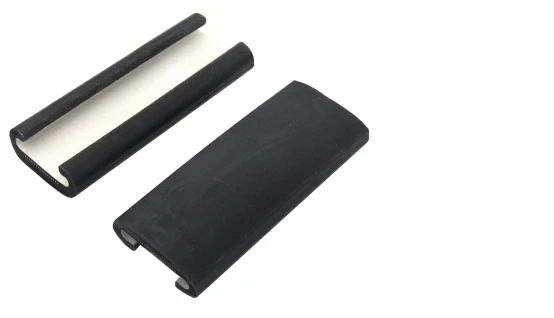
The handrail is the part of an escalator that passengers touch without thinking about it. It is also the part that gets blamed when someone loses balance, which is why the speed relationship to the steps is regulated rather than left to the manufacturer.
The belt itself is a composite. The outside is a rubber or rubber-like compound, the kind that has to grip a hand, resist sweat and grease, and not crack in a drafty shaft. Inside are tension members, usually steel wire ropes or polyester cords running the full length of the loop. They carry the pull. On the inner surface, the side that rides on the guides, there is a sliding layer, often a fabric or a low-friction compound, so the belt does not drag on the guide rail.
That construction explains the failure modes. The rubber cracks first at the points of highest bending, which are the newel wheels at each end, and it cracks on the inner surface before the outer. The cords hold the belt together after the rubber has started to fail, so a handrail can look reasonable from the outside and be finished inside. The sliding layer wears where the guides are dirty or misaligned, and the belt starts to run hot in that one area.
Drive comes from the main drive shaft. A friction wheel, sometimes called the handrail drive wheel, is mounted on the drive spindle and pressed against the inner surface of the handrail. Friction between the wheel and the belt pulls the belt around. There is usually a pressure roller on the outside of the handrail opposite the drive wheel, and its setting decides how much of the belt is in contact and how hard the belt is squeezed.
That is the whole mechanism: no teeth, no chain, no timing. Which means slip is always possible, and slip is what you find when the belt is loose, the drive wheel is glazed, or the guide system is dragging.
The speed rule matters. The handrail must run at the speed of the steps or slightly faster, within about zero to two percent, and never slower. The reason is the passenger. Someone holding a handrail that moves slower than the steps is being pulled backward relative to the stairway, and on a down-running escalator that is a fall. The independent drive exists so the handrail can be trimmed to that relationship, and the setting is checked with a tachometer, not by eye.
Tension is maintained by a carriage or a spring at the return end. Too tight and the belt stretches, thins at the splice, and loads the newel bearings. Too loose and it slips on the drive wheel, wears the inner surface, and can jump out of the guides. The tension device has a working range, and a handrail that is at the end of that range is due for replacement, not for another turn of the adjuster.
Around the loop sit the guide components: the newel wheel at each end, guide rollers along the incline, the handrail inlet and the return guide. Each of them is a wear item, and each of them can put a side load on the belt that the belt was not designed for. A worn guide roller is the most common cause of a handrail that runs off center, and a handrail that runs off center wears the splice.
Moving walkways use the same idea with a flatter geometry and often a longer loop, and the same rules apply. The handrail is a safety device that happens to look like a comfort feature, and treating it as trim is how handrails end up running hot, cracked, and overdue.